Other Topics
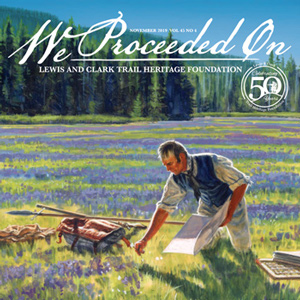
Other topics include music, holidays, High Potential Historic Sites, and an index of articles from We Proceeded On.
Watercolor provided by waynewilsonart.com
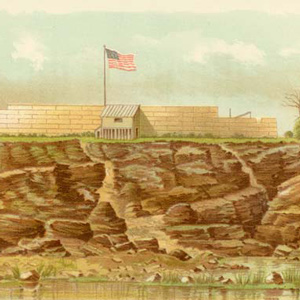
Some encouraging news
Once again, pea soup fog delays departure, but this time, Lewis confirms his theory that the fog rises when the Ohio River water is warmer than the surrounding air. After departure, they stop at Fort MacIntosh near Beaver, Ohio, and discharge one of the crew. Lewis is encouraged when learning that the Ohio River becomes deeper 24 miles down. Slowed [...]
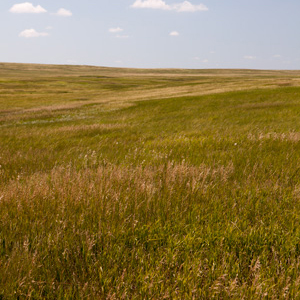
Endless prairie views
After a cold morning on the Missouri River, the enlisted men and engagés move the boats around numerous sandbars. They see yellow- and chalk-colored bluffs, fine plumbs, pronghorns, signs of the missing hunter, Pvt. Shannon, and endless prairie views. They camp above present Santee, Nebraska.
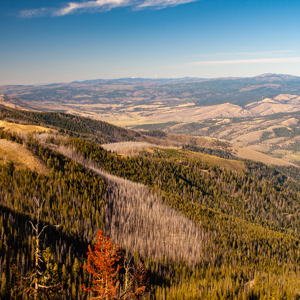
The Lost Trail
The expedition climbs the divide between the North Fork Salmon and Bitterroot rivers near present Lost Trail Pass. The weather is a mix of rain, snow, and sleet, and after dark they lay down "wet hungry and cold." Lewis collects a specimen of angelica.
News from home
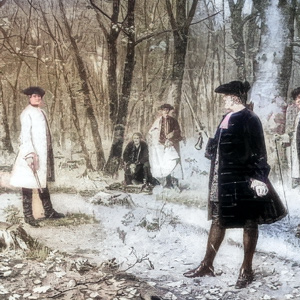
Heading home, the enlisted men paddle 60 miles down the Missouri River. They meet trader James Aird and his crew of 18 headed to the Sioux in two boats. The captains hear news from home: Thomas Jefferson is again president, James Wilkinson is now Louisiana governor, and Alexander Hamilton died in a duel with Aaron Burr. They camp somewhere above [...]
31 August–13 November 1803
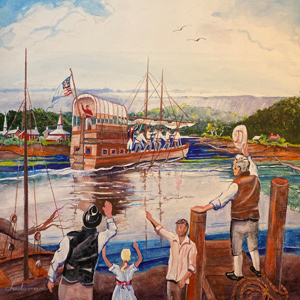
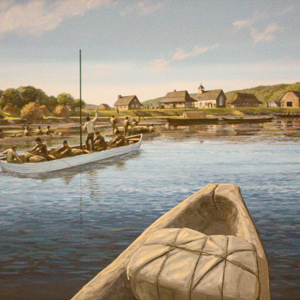
On 31 August 1803, after months of preparation, Lewis and his crew finally head down the Ohio River. Unfortunately, the water is so low that they must frequently unload and tow the overloaded barge with horses and oxen.
At the request of President Jefferson, Lewis disembarks at Cincinnati and travels overland to gather fossils at Big Bone Lick. He meets the boats, and together they continue to the Falls of the Ohio to pick up William Clark and several new recruits.
The expedition arrives at Fort Massac near the mouth of the Ohio on 11 November. There, they meet George Drouillard and immediately hire him as an interpreter. His first mission is to find the missing army recruits from Fort Southwest Point in Tennessee.
Day-by-Day Pages In-depth Articles
21 August–8 September 1804
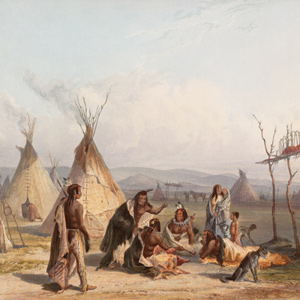
Moving along the present border between Nebraska and South Dakota, the expedition turns its ‘enlightened‘ attention to several features in the upper Missouri River mythology.
Instead of a volcano, they find blue earth, cliffs of white marl, and burning bluffs. Lewis becomes ill while testing one of the minerals he found. Instead of La Véndrye’s Golden Sands, they find hills of wind-blown loess. Instead of a Spirit Moundmountain of little people and devilish spirits, they find birds feeding on pissants atop present Spirit Mound.
Pvt. George Shannon fails to return from a hunting trip, and Patrick Gass is promoted to sergeant. At Calumet Bluff, their attention turns to receiving the Yankton Sioux. For two days, a council with speeches, gifts, songs, and dances is held.
At Old Baldy—present The Tower in South Dakota—everybody but the camp guard visits a prairie dog town, and they manage to capture one as a live specimen. He would travel to the Knife River Villages, Washington City, and reside in Peale’s Museum in Philadelphia.
Their encounters here had been encouraging, but Shannon is still missing, and the Lakota Sioux homelands are just ahead.
Day-by-Day Pages In-depth Articles
11 August–10 September 1805
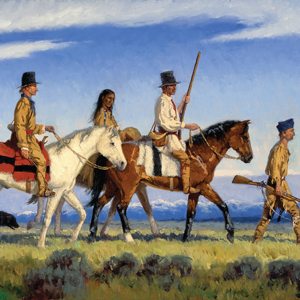
Having reached the end of the navigable Missouri, the captains—aided by Lemhi Shoshone Chief Cameahwait, Sacagawea‘s brother—begin acquiring horses, making pack saddles, and caching supplies they can no longer take with them.
With the help of the Lemhi Shoshones, everything is carried across the Continental Divide. Clark and their new guide they call Toby, scout the Salmon River and find it is not navigable.
After nearly three weeks with the Shoshones, the expedition moves down the Lemhi River valley and heads up the North Fork Salmon River. The captains ignore Toby’s advice to follow the Indian Road, and they are forced to spend a snowy night near the summit of Lost Trail Pass.
Dropping down from Lost Trail Pass, the Flathead Salish give them a warm welcome and sell them some horses. The expedition then proceeds down the Bitterroot River Valley to Travelers’ Rest where they have yet to cross the Bitterroot Mountains.
Day-by-Day Pages In-depth Articles
11 August–26 September 1806
While hunting on the Missouri River below present Williston, North Dakota, Lewis is accidentally shot through the flesh of his buttocks. The next day, they catch up to Clark’s party at Reunion Bay. As one united force, they are ready to sprint down the river to St. Louis.
At the Knife River Villages, they drop off the Charbonneau family and pick up Chief Sheheke and interpreter René Jusseaume who will visit Washington City.
The faithful paddlers meet several traders and receive flour, whiskey, woven shirts, and most importantly, news of the United States.
On 23 September 1806, the citizens of St. Louis—having given them up for dead—provide a boisterous welcome. The captains commence writing.
Day-by-Day Pages In-depth Articles
Private
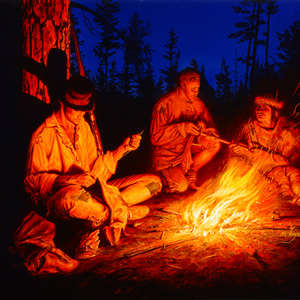
His journal begins, “about 3 Oclock P.M. Capt. Clark and the party consisting of three Sergeants and 38 men who manned the Batteaux and perogues. we fired our Swivel on the bow hoisted Sail and Set out in high Spirits for the western Expedition.”
The youngest member
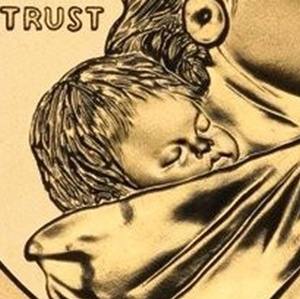
This 9-page series examines the life of Jean Baptiste Charbonneau—the infant son of Sacagawea who traveled across the continent with the Lewis and Clark Expedition. He was educated in St. Louis and Europe, a mountain man, military guide, and California miner.
Private
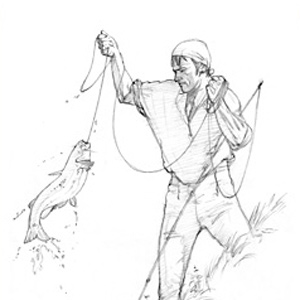
Silas Goodrich was the expedition’s principal fisherman. He also did well when trading for food with Indians from time to time.
Meriwether Lewis William Clark Sacagawea York Jean Baptiste Charbonneau Seaman All Members
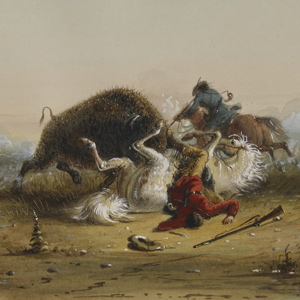
Pierre and the Buffalo in Jean Baptiste, Mountain Man.
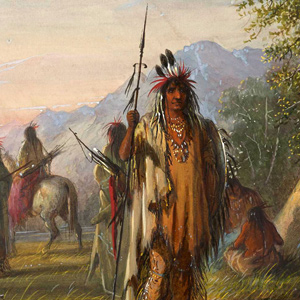
Snake Indian Camp in August 19, 1805.
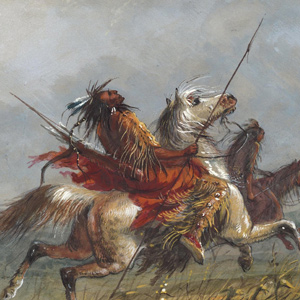
Blackfeet on the Warpath in The Blackfeet Confederacy
Miller’s reputation rests on his single Green River Rendezvous trip from which he transformed his original sketches and notes into a lifetime of images. His work preserves details of clothing, equipment, camps, transport, and performance. At the same time, his images were made for patrons who valued romance and spectacle. For that reason, Miller should be read carefully.
Other topics include music, holidays, High Potential Historic Sites, and an index of articles from We Proceeded On.
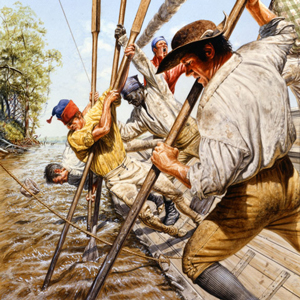
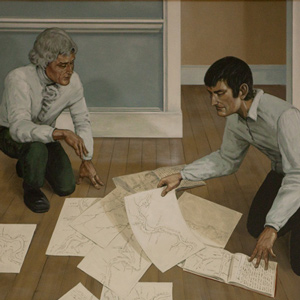
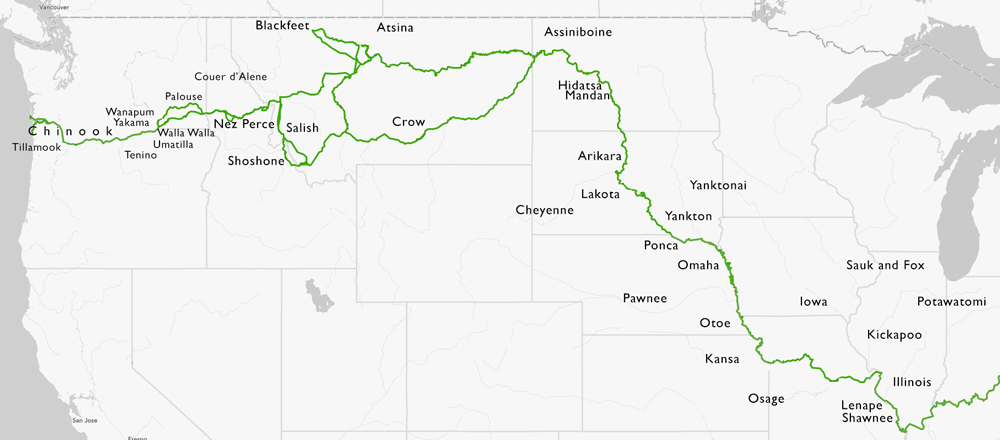
Starting with its genesis in Jefferson’s Monticello, Lewis’s training and preparations in Philadelphia, and the barge’s excursion down the Ohio River, the route they took, often called the Lewis and Clark Trail, crosses the continent weaving an epic tale of western exploration treasured by many today.
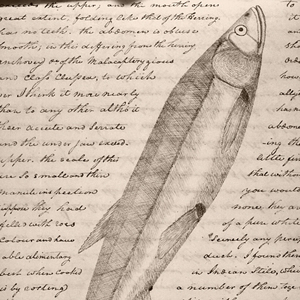
Because of the literate journalists, historians and visual artists can tell the Expedition’s story. When they celebrated with song and dance, we too can share in the experience.
Expedition Calendar
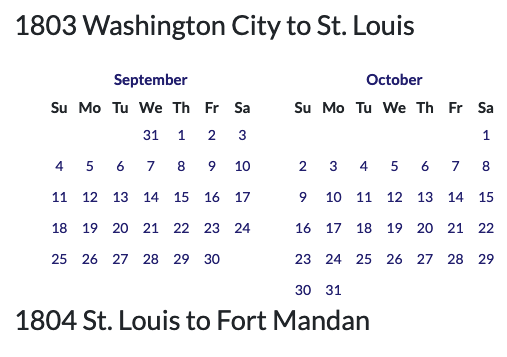
Links to every day-by-day page in a calendar format spanning 31 August 1803 to 26 September 1806. A page every day!
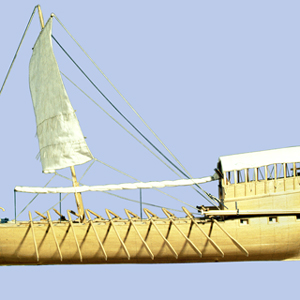
Starting at Pittsburgh, traveling to the Pacific Ocean, and then returning to St. Louis, the Lewis and Clark Expedition traveled approximately 10,600 miles. Of that, 85%—over 9,000 miles—was by boat. To understand travel in the early 1800 American West is to understand the boats and challenges of river navigation.
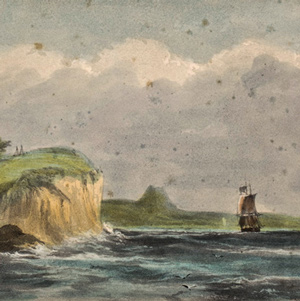
Lewis and Clark were among several significant explorers of North America both before and after the expedition.
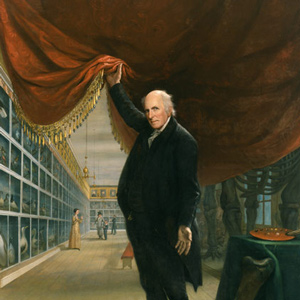
Legacy is a very slippery sort of term. If we could erase our myth concepts of Lewis and Clark … it might reawaken something really extraordinary in our national consciousness.
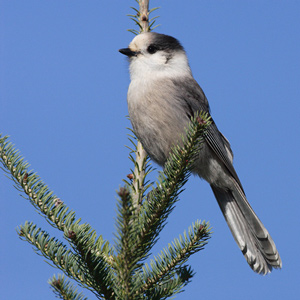
Their work in the emerging fields of botany, ethnography, geography, geology, and zoology are now considered classics of early American scientific literature.
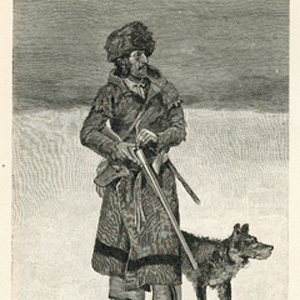
Given President Jefferson’s directive to establish commerce, the captains worked extensively within a long-established network of North American fur trade. Part of their mission was to help establish the United States of America’s position within that industry.
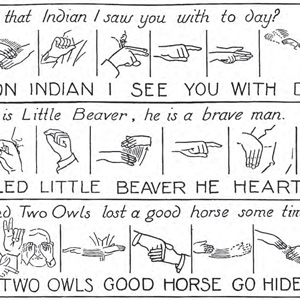
From clichés and colorful sayings of the time to Native American languages, these pages feature the art of language.
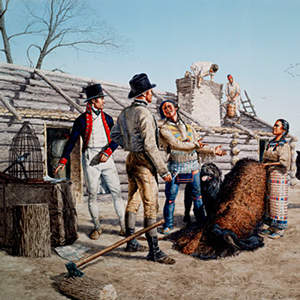
The success of the Lewis and Clark Expedition was due to its many members and the people they met, including politicians, Eastern gentleman scientists, traders, and the many people already living in the American west.
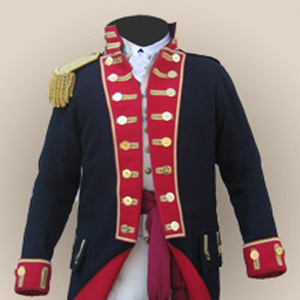
Throughout the expedition the soldiers were expected to conform to the rules and routines of the frontier soldier of 1803.
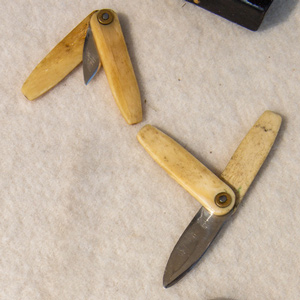
From major crisis such as the death of Sgt. Floyd, Lewis’s gunshot wound, and the illness of Sacagawea to minor events such as sexually transmitted diseases, mosquito-born illnesses, and deep cuts, the medical aspects of the Lewis and Clark Expedition provide an interesting topic of study.
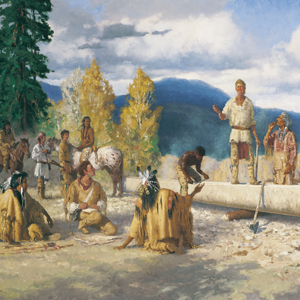
Lewis and Clark left behind among many Indians a legacy of nonviolent contact. Those who came later enjoyed that legacy and too often betrayed it.
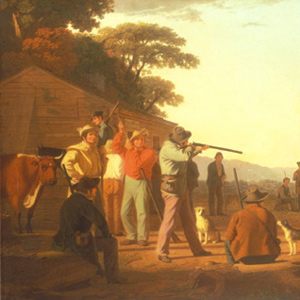
Although hunting and fishing were often considered a ‘gentleman’s sport’ especially in Europe, hunting and fishing for Native Americans and Americans alike were a matter of survival. The success of the Lewis and Clark Expedition depended on the success of its hunters.
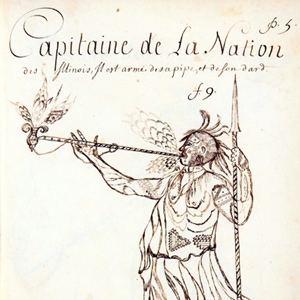
The Lewis and Clark Expedition benefited from the Indians’ knowledge and support. Maps, route information, food, horses, open-handed friendship—all gave the Corps of Discovery the edge that spelled the difference between success and failure.
To cross the Rocky Mountains, the Lewis and Clark Expedition needed horses and the skills to manage them. Despite their seemingly constant struggle to find missing and stolen horses, as a kind of calvary unit, they left hoof prints on approximately 1,500 miles of western terrain.
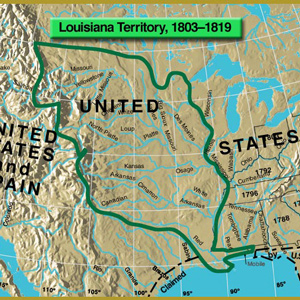
The President’s representatives in Paris had bargained successfully with Napoleon’s bureaucrats not only to buy the port of New Orleans, then the keystone of the continent, but also to acquire, at three cents an acre, an area extending from the Mississippi River to . . . where? No one knew until Meriwether Lewis stood at the crest of the Rocky Mountains at a place known today as Lemhi Pass, on 12 August 1805.
Experience the Lewis and Clark Trail
The Lewis and Clark Trail Experience—our sister site at lewisandclark.travel—connects the world to people and places on the Lewis and Clark Trail.
This site is provided as a public service by the
Lewis and Clark Trail Alliance
with additional funding from the following: