Joseph Mussulman
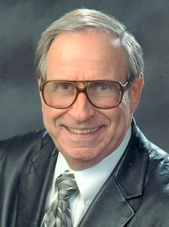
Marc A. Hefty photo.
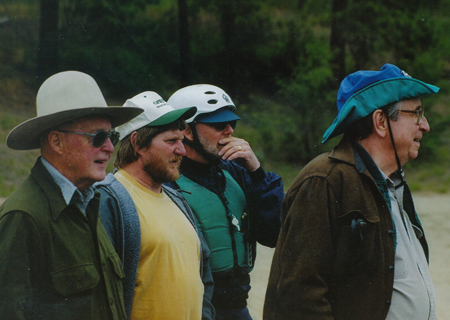
Photo by Bill Bevis.
Left to right: Two concerned dugout canoe owners, one concerned expert paddler, and Joe grinning with delight
Joseph A. Mussulman (1928–2017) was the founding producer, editor and writer for Discovering Lewis & Clark. After five years of preparation and experimentation the website went online in 1998, under the auspices of a non-profit entity called VIAs Inc., and funded by grants from various sources, especially–throughout the bicentennial observance from 2003 to 2006–the Challenge Cost Share Program of the National Park Service. In 2009 the site was taken over by the Lewis & Clark Fort Mandan Foundation of Washburn, North Dakota.
Dr. Mussulman earned his bachelor’s and master’s degrees in music history and literature at Northwestern University in 1950 and 1951. As a Danforth Scholar he earned a doctorate in humanities from Syracuse University in 1967.
He has written and produced a number of interpretive programs in collaboration with audio specialist Richard H. Kuschel, also of Missoula Montana. In 1986, he wrote, narrated, and co-produced a multimedia presentation for the Blaine County Museum (MT) titled Forty Miles from Freedom, about the Non-Treaty Nez Perce Indians’ final battle with the U.S. Army, at the Bear Paw Mountains in 1877. In 2012-13 Mussulman and Kuschel revised the 20-minute onsite production and updated it in High Definition video. In 1994 their interactive self-guided audio-CD tour of Yellowstone National Park, a five-hour program produced for Tour Technologies, Inc., received first prize in the category of media productions from the National Association for Interpretation. Their Two Days to Destiny, an audio interpretive tour of the Little Bighorn Battlefield, won first place from the NAI in 1995.
Mussulman is the author of five articles on Lewis and Clark that appeared in We Proceeded On, the official journal of the Lewis and Clark Trail Heritage Foundation, Inc.: “My Boy Pomp’: About That Name,” Vol. 21, No. 2 (May 1995); “Soundscapes: The Sonic Dimensions of the Lewis and Clark Expedition,” Vol. 21, No. 4 (November 1995); “Men in High Spirits: Humor on the Lewis and Clark Trail,” Vol.22, No. 2 (May 1996); “‘In Greatest Harmoney’: ‘Meddicine Songs’ on the Lewis and Clark Trail,” Vol. 23, No. 4 (November 1997); and “Pomp’s bier was a bar,” Vol. 27, No. 1 (February 2001).
Dr. Mussulman has designed and produced maps for various books, brochures and study guides about Lewis and Clark, including 58 full-color maps illustrating the expedition’s entire route from coast to coast for the travelers’ guide, Along the Trail with Lewis and Clark, by Barbara Fifer and Vicky Soderberg (2nd ed., Helena: Montana Magazine, 2001). Those maps also appeared in the same publisher’s annual Lewis and Clark Travel Planner and Guide. They may be seen in Discovering Lewis & Clark at Discovering Lewis & Clark from the Air. In 1998, he created a poster illustrating the trail from Washington, D.C. to the Pacific, for Farcountry Press.
His other publications include a biography, Dear People . . . Robert Shaw (Indiana University Press,1979; reprint, Chapel Hill, NC: Hinshaw Music, 1996), and Music in the Cultured Generation (Evanston: Northwestern University Press, 1974). From 1987 through 1998 he was the interpretive writer and designer of Montana Afloat, a series of sixteen maps of Montana’s major floatable rivers.
Dr. Mussulman was a 1999 recipient of a Montana Governor’s Arts Award. Several years later he received an award of meritorious achievement from the Lewis and Clark Trail Heritage Foundation “for outstanding contributions in bring to this nation a greater awareness and appreciation of the Lewis and Clark expedition.” In 2005, he received the Montana Governor’s Humanities Award.
Contributions to this Site
Horse Packing
Traveling with horse and mule
by Joseph A. Mussulman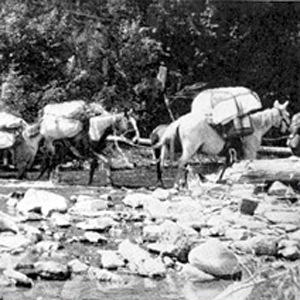
Loading and handling a packhorse is hard work. It demands not only a great deal of physical strength and endurance, but also an eye for balancing a load on the first try, a head full of horse sense, the patience of a saint, and lots of experience.
The Marias River Risk
"Of highest national importance"
by Joseph A. Mussulman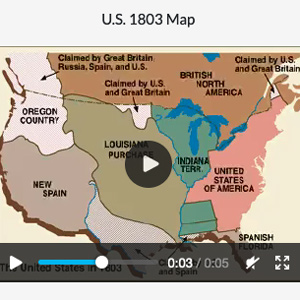
Why was it so important that Meriwether Lewis was willing to risk his life in a region occupied by the “Pahkees” or Minnetares, the Assiniboines, and other people whom he had been led—by their enemies, of course—to believe were “vicious and illy disposed”?
The Marias River by Air
Narrow escape
by Joseph A. Mussulman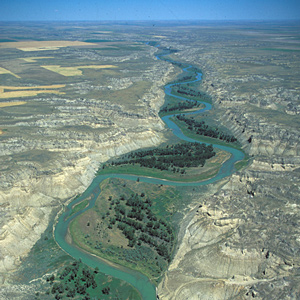
“I sliped at a narrow pass of about 30 yards in length and but for a quick and fortunate recovery by means of my espontoon I should have been precipitated into the river down a craggy pricipice of about ninety feet.”
Indian Commissions
Tools of diplomacy
by Joseph A. Mussulman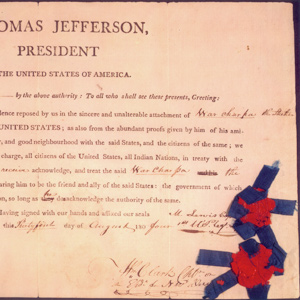
Each peace medal given out was usually accompanied by a commission, also called a parole, which is the French word for promise..
Defining ‘Squaw’
Shades of meaning
by Joseph A. Mussulman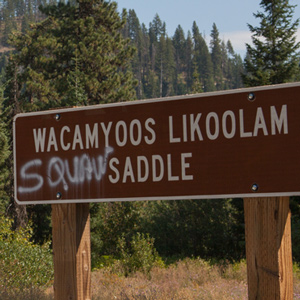
Both of the captains referred to Charbonneau’s young wife as a squaw, usually spelling it with a post-vocalic /r/—”Squar.” In the 1980s a nationwide movement arose to extirpate squaw from general use, because of its worst connotations.
Larocque at Fort Mandan
by Joseph A. Mussulman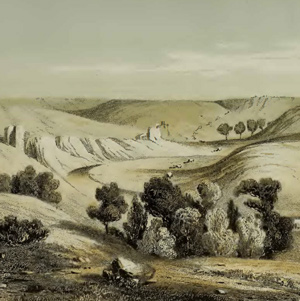
In the fall of 1804, Larocque’s job was to take a supply of North West Company merchandise to the Mandan and Hidatsa villages and trade for furs. While there, he asked the captains if he could join the expedition.
Giant Springs
by Joseph A. Mussulman, William O'Keefe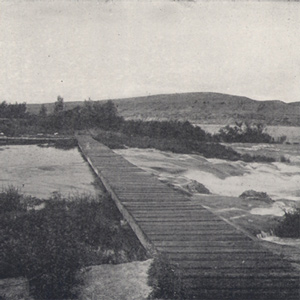
Clark and his five men “proceeded on up the river a little more than a mile to the largest fountain or Spring I ever Saw, and doubt if it is not the largest in American Known.”
Deists in the ‘Wilderness’
by Joseph A. Mussulman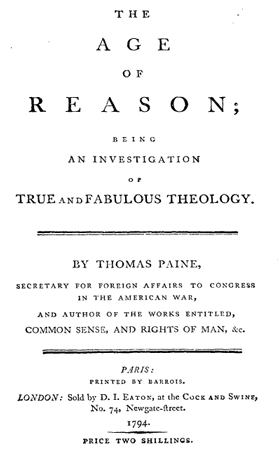
As deists in the ‘wilderness,’ Lewis and Clark simply wanted to observe and admire the surrounding world and learn to understand the relationships that held it together.
Early American Entomology
by Joseph A. Mussulman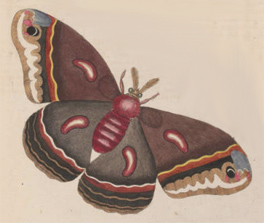
There were only four notable 18th century naturalists who showed much interest in America’s insects: a young Englishman named Mark Catesby, Finnish botanist Peter Kalm, Philadelphian William Bartram, and Reverend Frederick Melsheimer of New Hampshire.
Lewis’s Birthday Meditation
A "sadly interesting passage"
by Joseph A. Mussulman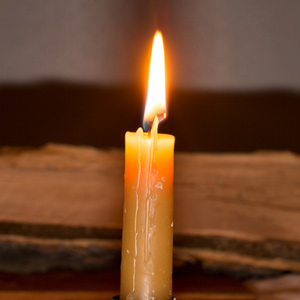
It has been remembered as “the most gloomy self-examination of the entire journal,” and “a passage of unreasonable melancholy,” of poignant sadness and self-doubt.
Hares and Jackrabbits
Lepus species
by Joseph A. Mussulman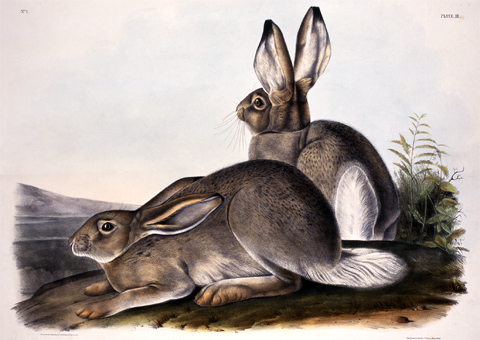
Lewis got his first close look at that “large hare of America,” when one of the Corps’ ace hunters, Private John Shields, bagged the first specimen more than 1,100 miles (by Clark’s estimate) up the Missouri River.
Columbian Black-Tailed Deer
Odocoileus hemionus columbianus
by Joseph A. Mussulman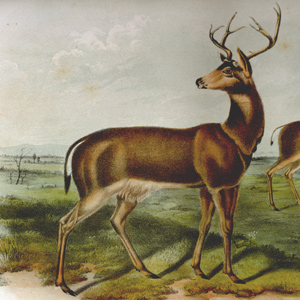
Lewis’s conviction that the “black tailed fallow deer of the coast” and the “common fallow deer” were two distinct species was sufficient to urge later investigators to try to clarify them.
Columbia River Dams
The rough places plain
by Joseph A. Mussulman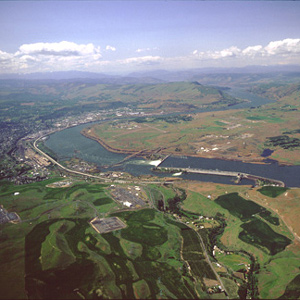
Bonneville Dam, was the first dam to be built on the Columbia River. The slackwater pool it impounds, called Lake Bonneville, eliminated the Cascades as a barrier to commercial shipping, and provided a deep, navigable channel for barges and tugs.
Caching Supplies
by Joseph A. Mussulman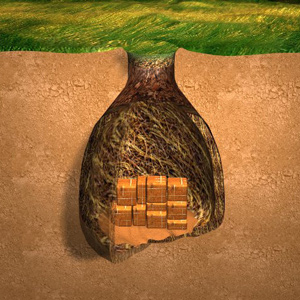
Lewis records the method for hiding and storing goods, which he learned from the French members of the Corps.
Fight on the Two Medicine
An "accedental interview"
by Joseph A. Mussulman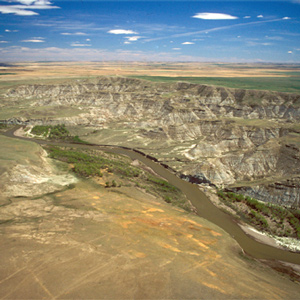
The Indians invited the Americans to share a campsite that night. At daybreak, despite the soldiers’ watchfulness, the Indians tried to steal the Americans’ guns and horses. That immediately erupted into a skirmish.
The Milk River by Air
Milky blend
by Joseph A. Mussulman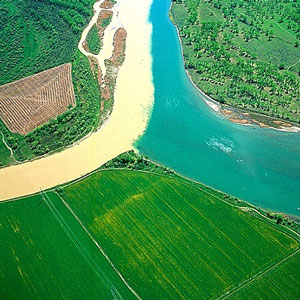
“from the colour of it’s water we called it Milk river.” He wondered whether this might be the river the Hidatsas had called “the river which scoalds at all others.”
Fort Rock
Refuge at The Dalles
by Joseph A. Mussulman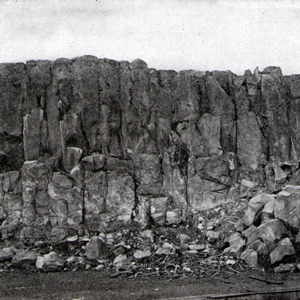
The party “Came too, under a high point of rocks on the Lard. Side below a creek”—Quenett (“salmon”), now Mill Creek—a “Situation well Calculated to defend our Selves,” and duly named their bivouac “Fort Rock Camp.”
Harvesting the Hunt
by Joseph A. Mussulman
After the animal is shot, the work begins: field dressing, hauling the meat to camp, butchering, and preserving the extra meat for future meals.
The Big Bend of the Missouri
Around the 'Grand Detour'
by Joseph A. Mussulman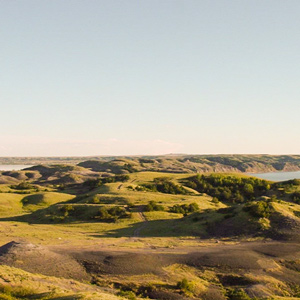
The huge meander called the Big Bend, or Grand Detour, had been a well-known Missouri River landmark for many years when the Corps of Discovery arrived at its lower bend on 19 September 1805.
The Tobacco Root Mountains
Beautiful prairies
by Joseph A. Mussulman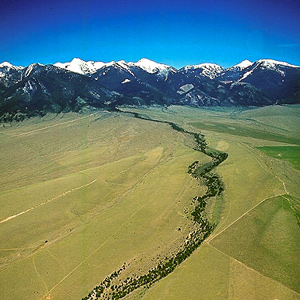
“We proceeded on and passed a large beautiful bottom,” wrote Pvt. Joseph Whitehouse on 2 August 1805, “and Prairies lying on both sides of the River.” On each side of the valley, Sergeant Gass observed, “there is a high range of mountains . . . with some spots of snow on their tops.”
The Shoshone Fish Weirs
by Joseph A. Mussulman, Steve F. Russell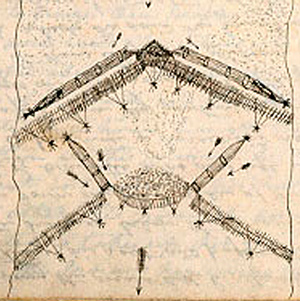
Clark visits a Shoshone camp on the west bank of the Lemhi River near today’s Salmon City, where he and his men are fed on “Sammon boiled, and dried Choke Cher[rie]s,” and taken on a sight-seeing trip to the nearby permanent fishing weirs.
Bismarck and Mandan
The main attraction
by Joseph A. Mussulman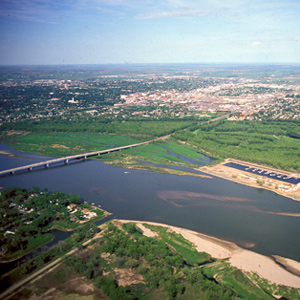
The Corps of Discovery arrived in the vicinity on 20 October 1804, having worked their way some 1,450 miles up the Missouri in 155 days. That day, wildlife was the main attraction.
The Lochsa River
Packer Meadows to Colt Killed Creek
by Joseph A. Mussulman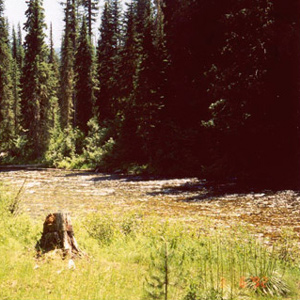
Snow was falling in the high country above them on the morning of 14 September 1805 when, after striking camp two miles downstream from Packer Meadows, the Corps slogged down the Glade Creek canyon through rain and sleet.
Buffalo: Native Uses
An Indian commisary
by Joseph A. Mussulman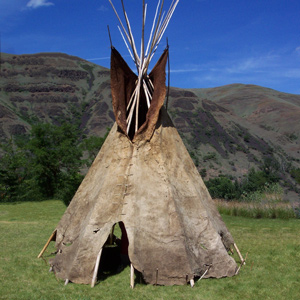
The Lewis and Clark River
Coast Range winter
by Joseph A. Mussulman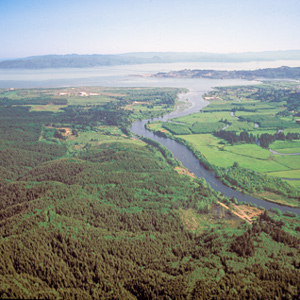
During their time at the coast, the Corps saw only six sunny days; the rest brought clouds, fog, rain, and a little snow. Fifty-three were partly clear. That’s a normal winter on the west slopes of the Coast Range.
The Knife River Villages
Marketplace
by Joseph A. Mussulman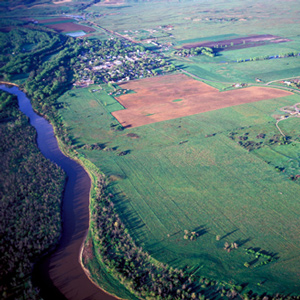
Reaching the mouth of the Knife River on 27 October 1804, the expedition arrived in the midst of a major agricultural center and marketplace for a huge mid-continental region. The five permanent earth lodge communities there offered a panorama of contemporary Indian life.
Illustrating the Great Fall
At the Falls of the Missouri
by Joseph A. Mussulman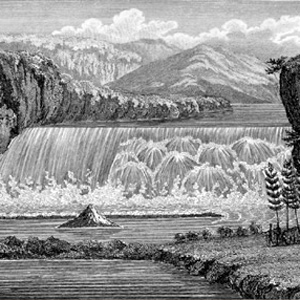
After Lewis’s preliminary sketch, later artists and photographers contributed to the visual documentation of the “sublimely grand” waterfall including Barralet, Gustavus Sohon, A. E. Mathews, and F. Jay Haynes.
The Snowberry
Symphoricarpos albus
by Joseph A. Mussulman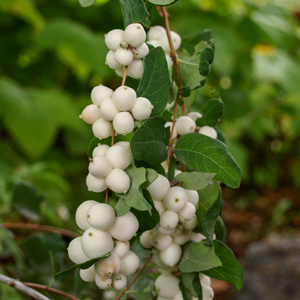
13 August 1805 near Lemhi Pass, Lewis wrote that he noticed “a species of honeysuckle much in it’s growth and leaf like the small honeysuckle of the Missouri.” He had discovered a plant that was new to the scientific community—the snowberry.
The Niobrara River
Rushing river
by Joseph A. Mussulman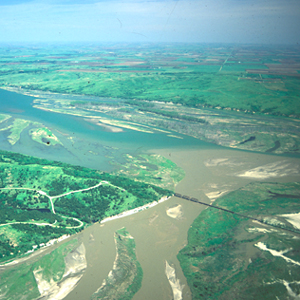
“We hoisted Sail,” wrote Ordway, and “ran verry fast a Short time. Broke our mast.” The party “came to” on the west side of the Niobrara. There the men made a new mast from the trunk of a tall, sturdy red cedar, which apparently lasted at least until they reached the Mandan villages.
Holidays at Fort Clatsop
by Joseph A. Mussulman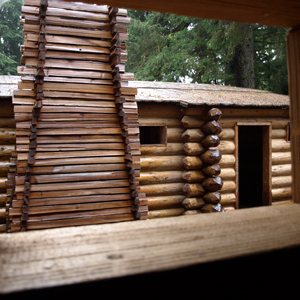
At dawn the captains were roused, according to Clark, by “the discharge of the fire arm[s] of all our party & a Selute, Shoute and a Song which the whole party joined in under our windows, after which they retired to their rooms [and] were Chearfull all the morning.”
Outfitting the Expedition
Buying supplies in Philadelphia and St. Louis
by Frank Muhly, Joseph A. Mussulman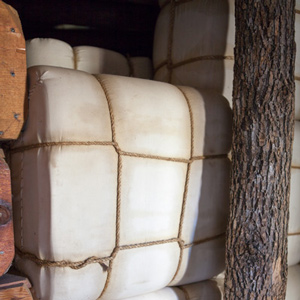
The original shopping list contained more than 180 items, including various “Mathematical Instruments”, arms and accouterments, ammunition, clothing, camp equipage, provisions, Indian presents, medicine, and packing materials.
Fiddle Music
Fiddle music on the trail
by Joseph A. Mussulman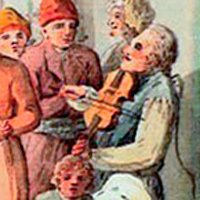
The principal catalyst for their musical diversions was undoubtedly Private Pierre Cruzatte, whose official duty was as a boatman, but who also played the fiddle.
The Osage River by Air
"Delightfull prospect"
by Joseph A. Mussulman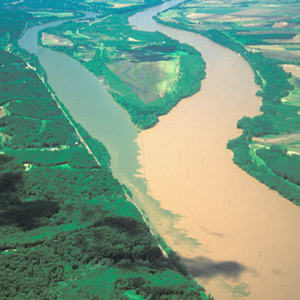
At 4 P.M. on 1 June 1804, the expedition arrived at the mouth of the Osage River, one of the major Indian fords on the lower Missouri.
Apsáalooke Country
by Joseph A. Mussulman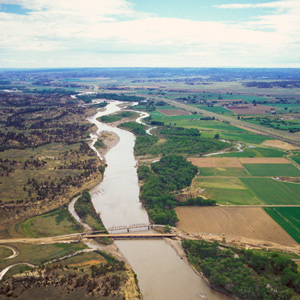
The Crow People called themselves Apsáalooke, sometimes heard as Absarokas or Absalookas, or “Children of the Large-beaked Bird.” Various early white travelers transcribed or defined the name differently, but the Apsáalooke maintain it refers to the raven. One of the oldest and most famous landmarks on Lewis and Clark’s route, now known officially, but erroneously, as Pompeys Pillar or, among the Apsáalooke, Iish-biia ah-naac’he’.
Crooked Falls by Air
A "thousand conjectures"
by Joseph A. Mussulman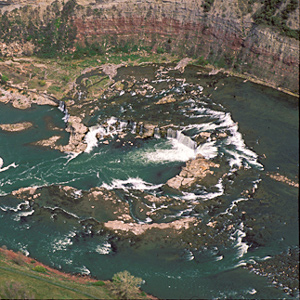
After passing “one continued rappid and three small cascades of abut for or five feet each,” Lewis “arrived at a fall of about 19 feet,” which he suitably named “the crooked falls” and proceeded to describe its geometry.
The Bears Paw Mountains
And the Sweet Grass Hills
by Joseph A. Mussulman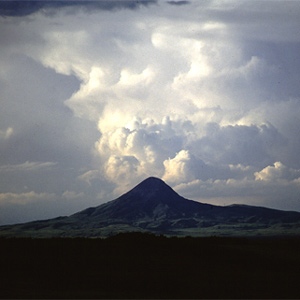
By his 5 June 1805 estimate, Meriwether Lewis was 38 miles up the Marias River from the expedition’s camp on the Missouri. To the northeast, he identified the Bears Paw Mountains and Sweet Grass Hills.
Ruffed Grouse
Bonasa umbellus
by Joseph A. Mussulman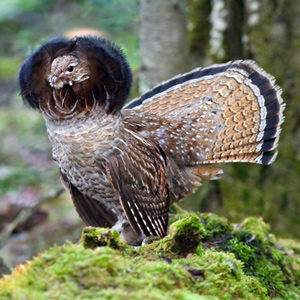
At Fort Clatsop on 5 February 1806, Reubin Field returned from a hunt with “a phesant which differed but little from those common to the Atlantic states.”
Camp Disappointment by Air
by Joseph A. Mussulman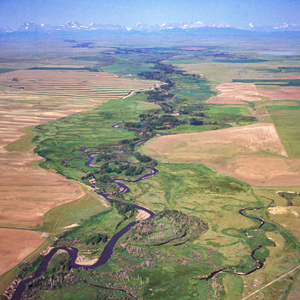
On 19 July 1806 Lewis intersected the Marias River six miles above the point where he had ended his exploration of its lower reaches the previous spring. He and his party now continued northwest along the Marias reaching its most northern point.
End of the Enlightenment
Anti calomel and the "genteel tradition"
by Joseph A. Mussulman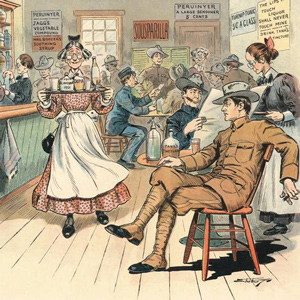
No more calomel! Not just an anthem, a reflection on the transition from the “Age of Enlightenment” to the “genteel tradition.”
Into the Breaks
Fred Robinson Bridge to Judith Landing
by Joseph A. Mussulman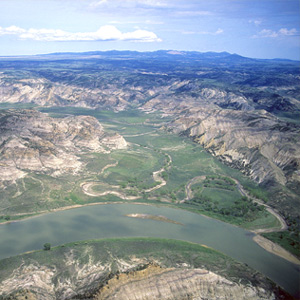
In 1804-5-6 Lewis and Clark called all rough or relatively precipitous elevations, wherever they saw them, “broken” lands; the topography along this 149-mile stretch of the Wild and Scenic Missouri River was clearly the worst they had ever seen.
The Mosquito in Literature
Songs and superstitions
by Joseph A. Mussulman
Poets and philosophers have meditated on it. The early Roman naturalist Pliny the Younger (ca. 30-ca. 112 AD) complained, “Who gave the mosquito so terrifying a voice, infinitely greater than it should be in comparison to the size of its body?”
The Rattlesnake Cliffs
The 'other' Beaverhead Rock
by Joseph A. Mussulman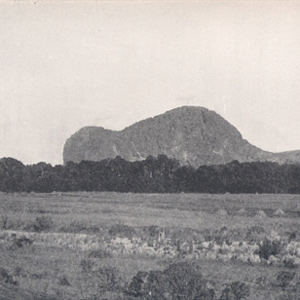
This is the landmark that white settlers believed Sacagawea really meant to identify as Beaverhead Rock . . . .
Crane Fly
Tipula abdominalis
by Joseph A. Mussulman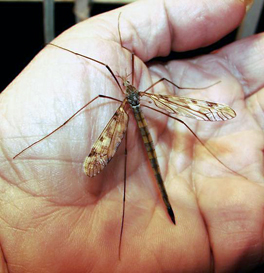
On 27 December 1805, Clark wrote: “Musquetors to day, or an insect So much the Size Shape and appearance of a Musquetor that we Could observe no kind of difference.”
Western Redcedar
Thuja plicata
by Joseph A. Mussulman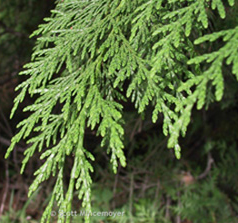
The tree that caught the Corps’ attention west of today’s Lolo Pass was a species that is unique to the Far West of North America, the western redcedar.
Colter’s Creek
Today's Potlatch River
by Joseph A. Mussulman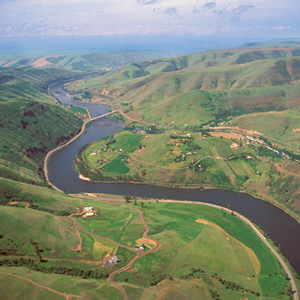
At 3 p.m. on 7 October 1805, the Corps loaded their five new dugout canoes–four large ones plus a small one “to look ahead”–and set out down the Clearwater River toward the Columbia and the Pacific beyond.
The Osages
by Joseph A. Mussulman, Kristopher K. Townsend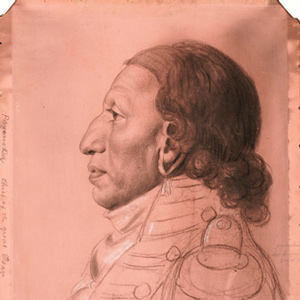
The Osage were experienced traders, exchanging horses and Indian slaves for French guns, knives, axes, kettles, and other metal objects. After the 1760s, the Osage adopted a new economic system of planting gardens in permanent villages, summer hunts in the plains, and fur-trapping in the winter.
Courts Martial on the Trail
Military trials during the expedition
by Joseph A. Mussulman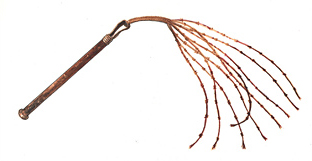
The first court martial took place on 29 March 1804, when John Colter, Robert Frazer, and John Shields were called before the court. Discreetly, Clark committed no details of this one to his journal, and no record of it was entered in the Orderly Book.
Making Leather
by Joseph A. Mussulman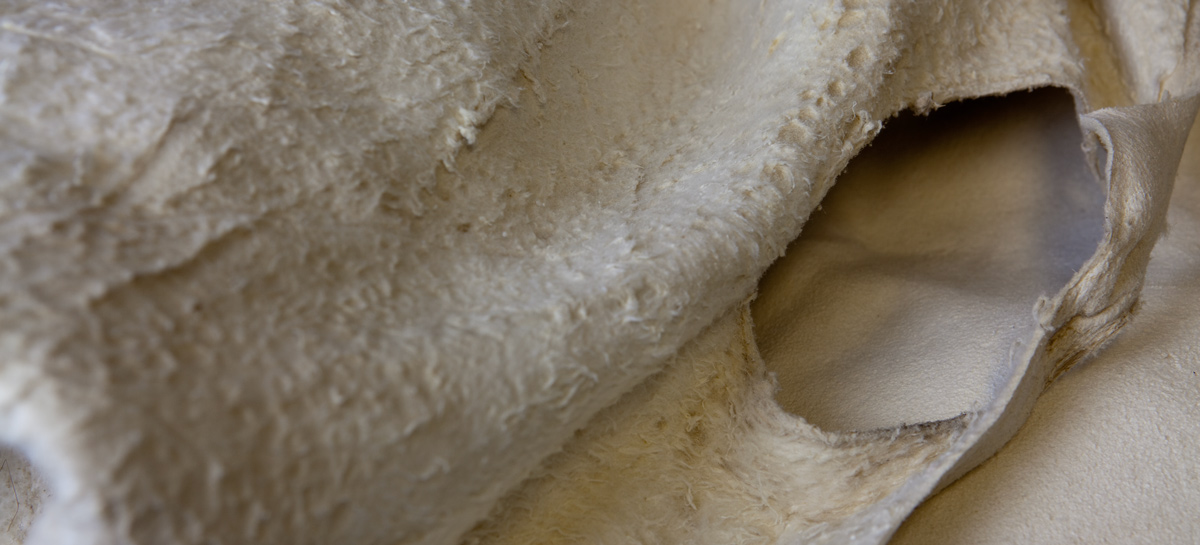
“The men of the garison are still busily employed in dessing Elk’s skins for cloathing.” Regrettably, Lewis was compelled to add that “they find great difficulty for the want of branes [brains].”
Tillamook Head by Air
Delightful view
by Joseph A. Mussulman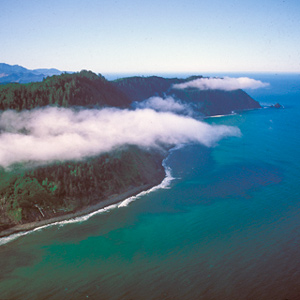
After two hours of “labour and fatigue,” at one point drawing themselves up by bushes and roots, they reached the summit of Bald Mountain. Clark’s description paraphrased by Biddle states, “Here one of the most delightful views in nature presents itself.”
Pryor’s Intended Route
The best of intentions
by Joseph A. Mussulman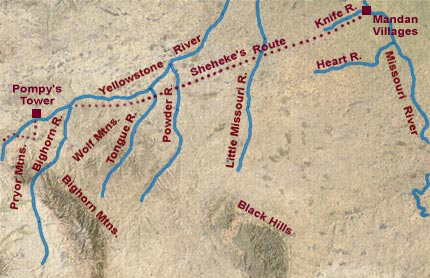
Via the shorter route, Pryor would have arrived at the Knife River villages by about 6 August 1806. A trip to see Hugh Heney at Fort Assiniboine would take another two weeks.
Experience the Lewis and Clark Trail
The Lewis and Clark Trail Experience—our sister site at lewisandclark.travel—connects the world to people and places on the Lewis and Clark Trail.
Discover More
- The Lewis and Clark Expedition: Day by Day by Gary E. Moulton (University of Nebraska Press, 2018). The story in prose, 14 May 1804–23 September 1806.
- The Lewis and Clark Journals: An American Epic of Discovery (abridged) by Gary E. Moulton (University of Nebraska Press, 2003). Selected journal excerpts, 14 May 1804–23 September 1806.
- The Lewis and Clark Journals. by Gary E. Moulton (University of Nebraska Press, 1983–2001). The complete story in 13 volumes.
This site is provided as a public service by the
Lewis and Clark Trail Alliance
with additional funding from the following: